DERIVATIVE FROM FIRST PRINCIPLES
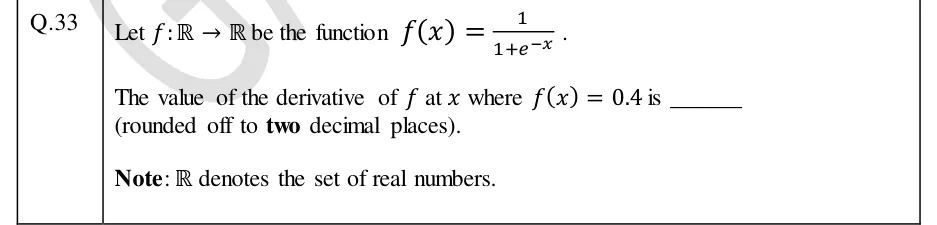
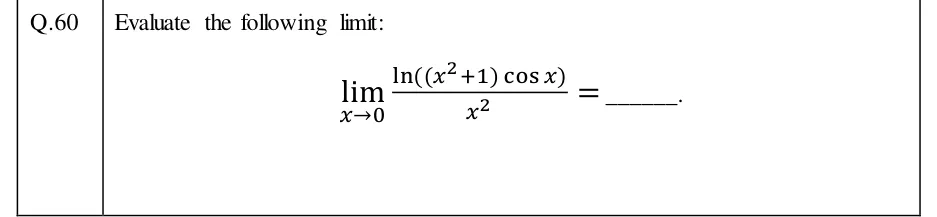
f′(a)=h→0limhf(a+h)−f(a)=x→alimx−af(x)−f(a)
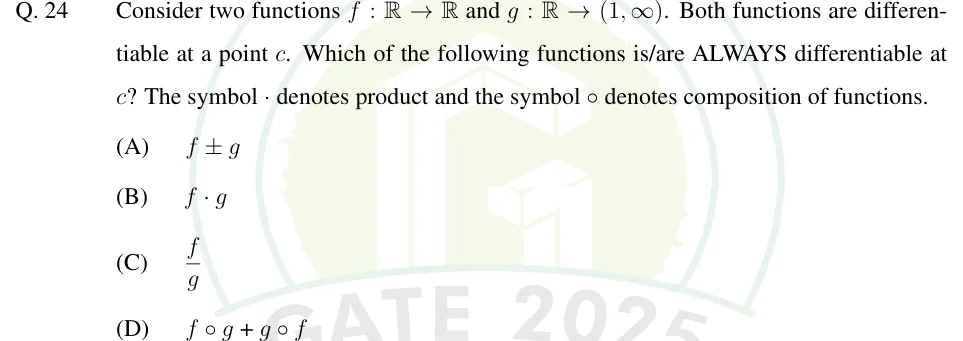
f is differentiable at a when this limit exists and is finite.
LEFT AND RIGHT DERIVATIVES
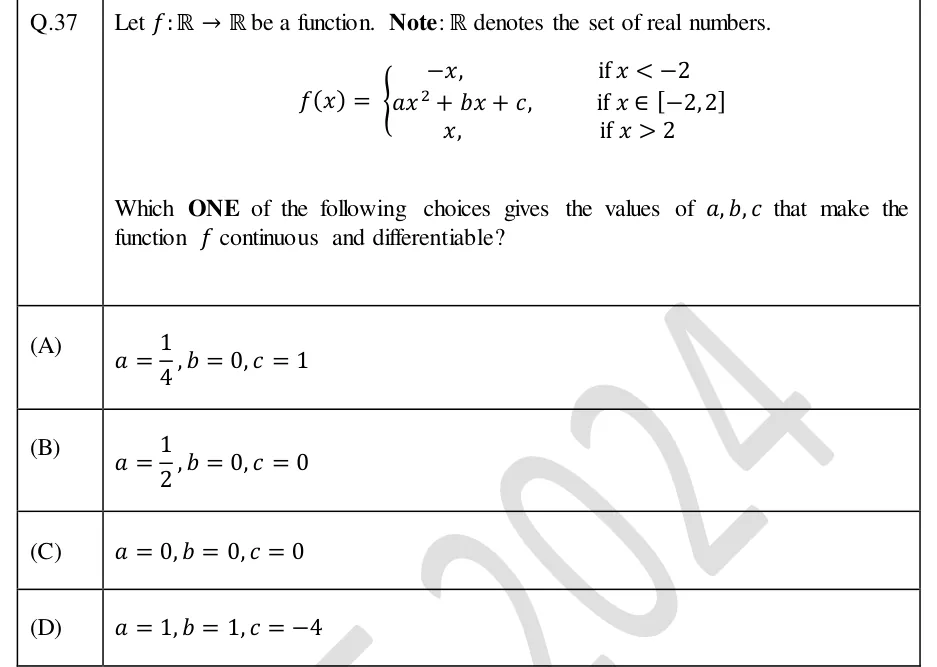
f−′(a)=h→0−limhf(a+h)−f(a),f+′(a)=h→0+limhf(a+h)−f(a)
f is differentiable at a if and only if both exist, are finite and f−′(a)=f+′(a).
DIFFERENTIABILITY IMPLIES CONTINUITY
f differentiable at a⇒f continuous at a
The converse is false. Hence a function that is not continuous at a cannot be differentiable at a.
The standard counterexample is f(x)=∣x∣: it is continuous at 0, but f−′(0)=−1 and f+′(0)=1, so it is not differentiable there. Common ways a function fails to be differentiable at a point include a corner (unequal one-sided slopes, e.g. ∣x∣ at 0), a vertical tangent (slope ±∞, e.g. x1/3 at 0), a cusp (one-sided slopes −∞ and +∞, e.g. x2/3 at 0), oscillation (e.g. xsin(1/x) with f(0)=0, continuous at 0 but f(h)/h=sin(1/h) has no limit), and a discontinuity.